Let the materials speak
Wood, woven fabric and matte surfaces can give a room depth without a busy palette. The useful question is not whether a material is fashionable. It is how it looks, feels and behaves in your home.
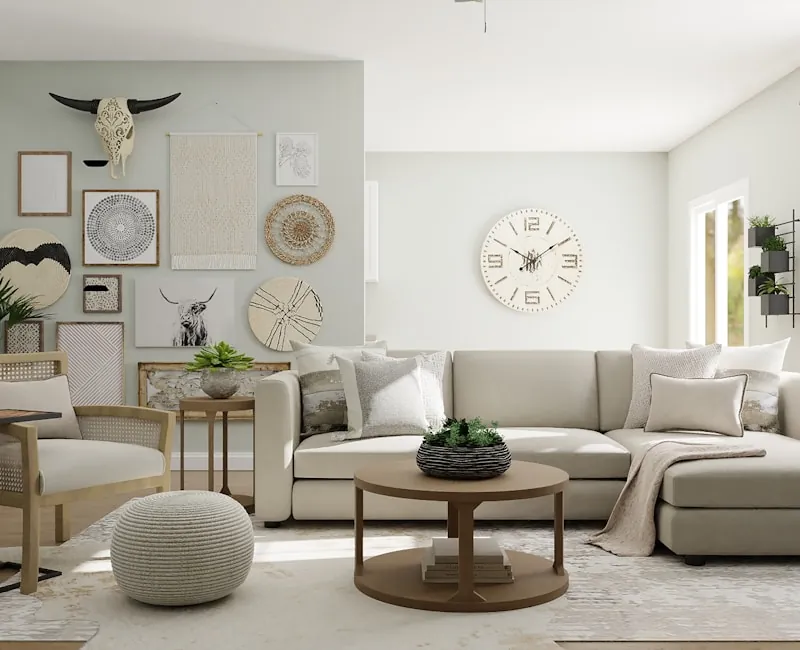
Find the undertone already in the room
Start with a fixed or substantial surface: the floor, kitchen fronts or a piece of furniture you plan to keep. Does it lean yellow, red, gray or neutral? Use that observation to narrow your samples rather than trying to match every item exactly.
Two woods can sit comfortably together when another detail connects them. A woven seat, a fabric shade or a repeated dark metal finish might provide that connection. View samples side by side in the actual room; a product photograph is only a starting point.
Balance smooth with textured
If the room has lots of glass, polished surfaces or plain cabinetry, introduce a small textured element first. Try a cotton throw, a woven basket or a simple upholstered cushion. You do not need each surface to compete for attention.
In a room with exposed grain, brick or many patterned textiles, a few smooth and plain pieces can create a place for the eye to rest. Variation works best when some materials play a quieter role.
Make maintenance part of the choice
Check how a material should be cleaned and whether it suits the way the space is used. Unsealed wood, pale upholstery and porous stone each need different care. Natural does not automatically mean durable, low maintenance or suitable for every household.
For a frequently used table, ask about the finish and follow the maker's care instructions. For textiles, read the washing label before purchase. A sample is useful for checking feel and color, but avoid home stain tests unless the supplier says they are appropriate.
Repeat lightly
A material repeated in two or three places can make separate pieces feel connected. A wooden frame may relate to a side table; a woven shade may echo a basket. These are small relationships, not a requirement to buy a matching set.
Give your existing belongings a role. A favorite mug, an inherited bowl or a well-used chair can bring a character that new accessories cannot reproduce. Materials show their best qualities when they are part of daily life.
Buy less, choose with context
Before buying, write down where the item will go, its measurements and how you will care for it. Check second-hand options where practical. If a product makes environmental claims, look for specific information about its materials and sourcing rather than relying on a general label.
Try this: gather three objects you already own, each with a different texture. Place them together in daylight and notice what connects them. Use that as the beginning of your palette.
Find your material palette ↗