A softer place to land
A calm living room is less about a particular style and more about how easily the room lets you live. Start with the things you notice every day: a difficult route around the sofa, a bright overhead light, or a table that never stays clear.
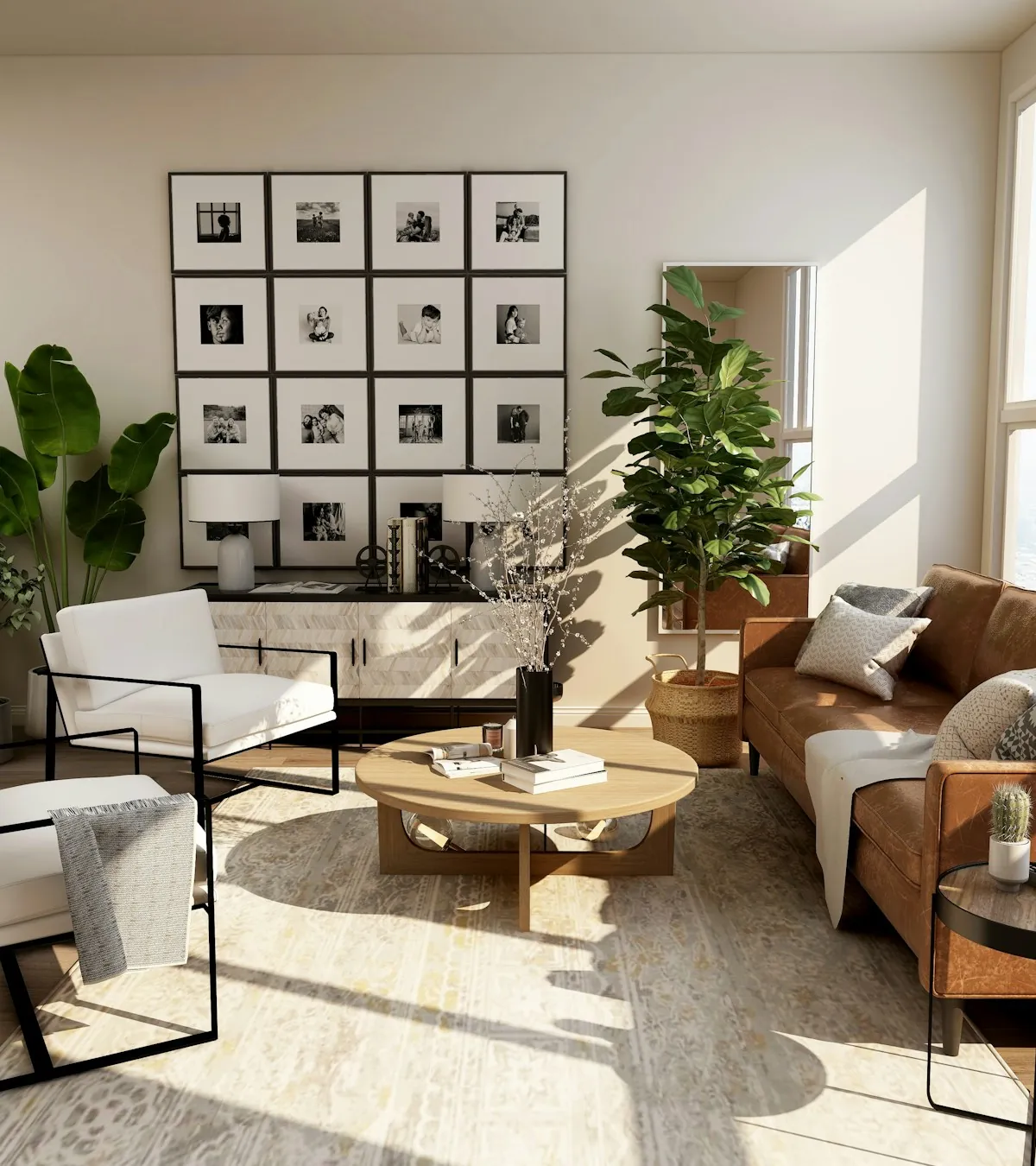
Give movement a little room
Walk from the doorway to the place you use most. If you have to turn sideways or step around a table, try moving a piece before considering a replacement. A layout can look balanced in a photograph and still be awkward to use.
Keep the route that connects your main seating, doorways and storage clear. Make enough room for the people who use the space, including anyone with a mobility aid. Masking tape on the floor can help you compare a new furniture footprint without buying anything.
Work with the light you have
Notice where daylight falls in the morning and afternoon. A chair you rarely use might become a favorite reading spot if it moves closer to a window. If glare is a problem, adjust the angle or try a light-filtering curtain before changing the room.
After sunset, a lamp beside a seat can feel more comfortable than relying on one overhead source. Choose bulbs that suit the fitting, check the manufacturer's maximum rating and keep fabric away from heat. Electrical changes belong with a qualified professional.
Add texture before adding color
A plain room may need variation in its surfaces rather than another accent color. A woven cushion beside a smooth sofa, or a matte ceramic object on a polished table, can create enough contrast to make the room feel considered.
Choose materials you can care for in everyday life. Read textile labels, consider washable covers where useful and think about how pets, children or strong sunlight might affect your choices. A material only works well if its upkeep works for you.
Let a few surfaces rest
Clear one surface completely and put back only what you use or enjoy seeing. A lamp, a book and a small bowl may be plenty. Keep objects you love; the aim is to give them space rather than to remove personality.
If daily clutter returns to the same spot, treat that as information. A basket for blankets or a tray for small essentials may support your routine better than a rule about keeping the room tidy.
Try it for a week
Make one change and live with it. Notice whether it makes reading, conversation or the evening tidy-up easier. Keep what helps and adjust what does not. A room can evolve without being finished all at once.
A simple first step: move one lamp or chair, clear one surface and take a photograph. Compare how the room feels at the end of the week before spending money.
Explore the color palettes ↗